|
As library collections become increasingly digital and less reliant on physical materials, a key question we face is how to connect patrons with these valuable digital resources and encourage their use. In the summer of 2025, the education and collections librarians at Boston University’s Alumni Medical Library (AML) collaborated to evaluate and highlight our Demand Driven Acquisition (DDA) EBSCO eBook Collection. DDA is an acquisition model in which patron use directly informs which eBooks are purchased. Through a DDA collection, an institution can offer a curated set of eBooks for patrons to discover, while only incurring costs for those titles that receive significant use. Our DDA collection was first implemented in 2023 and, as it had not been reviewed or refreshed since, had become outdated. As a result, many titles within the health sciences umbrella were no longer relevant to the academic programs offered on our campus. To address this, liaison librarians from the schools of medicine, dental medicine, and public health collaborated with the collections manager to evaluate the existing collection and identify titles that were either outdated or no longer aligned with current curricula, research priorities, and student interests. To start, we began weeding our DDA collection by first creating a shared spreadsheet of our titles and then defining some parameters for removal. We opted to remove all titles older than 15 years so the collection would be current, and we then sorted by specialty or discipline to continue removing a majority of titles from areas that our current programs do not support. For example, nursing and veterinary medicine titles were removed as we do not have programs for these health sciences disciplines. During this initial weeding phase, we met three times over the course of the summer months and were able to eliminate approximately 1,500 titles during that time. We submitted these titles to the vendor and the AML technical services librarian for removal from the EBSCO platform and library catalog. Following this assessment and weeding process, we moved into the second phase of the project: rebuilding the collection with current, high-quality content. New titles were selected to support not only the curricular and research needs of students and faculty, but also their broader professional and personal interests across the diverse health sciences disciplines and evolving multidisciplinary research areas we are seeing across our campus. Liaison librarians started adding new titles back into the collection on the eBook platform. One of the main resources that liaisons used to add titles back into the collection was Doody’s Core Titles (DCT). Liaisons used the DCT’s “Titles By Specialty” and Doody’s Special Topics Lists to make their selections. For example, the liaison to the school of public health utilized the DCT’s public health specialty list as well as the Doody’s Special Topics Lists on “LGBTQ+ Health” and “Climate Change & Its Effect on Health” to guide her selections. The other liaison librarians used DCT’s dentistry list as well as many of the clinical medicine and allied health lists to guide their selections to support the dental and medical programs. They also utilized the “Unique Title List” feature and filtered for Essential Purchase Titles to ensure that we had as many up to date, popular, and diverse titles as possible. Using DCT as a collection development tool ensures that the additions to our DDA collection include robust and diverse titles that will spark student interest and supplement current curriculum. To make eBooks in the DDA collection more discoverable, we have created QR codes that link to curated lists for specific health science topics. The QR codes can be found under the corresponding call number ranges at the end of each book stack. 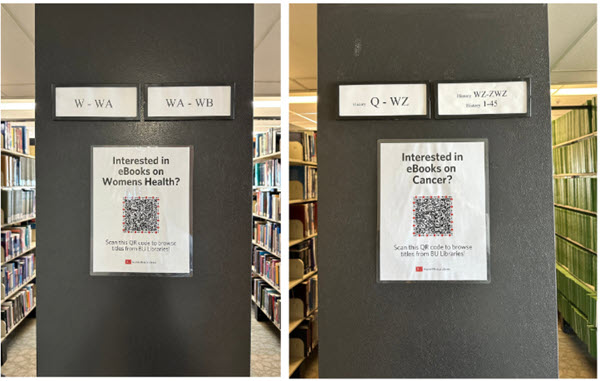
Image 1: The library’s QR codes for specific health topics, available for students to browse while in the stacks. Credit: Kristen Giordano We have also created a standard eBook template for all of our book displays. Each template includes a book cover image, a brief content description, and a QR code linking directly to the catalog record. Printed templates are displayed alongside the physical books in the display. 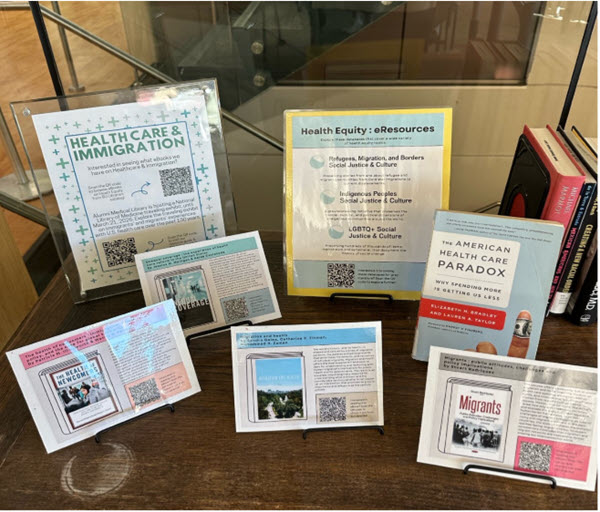
Image 2: The library’s book display with the QR codes linking to eBooks in the collection that complement the physical books on the display. Credit: Kristen Giordano This project was an amazing opportunity for interdepartmental collaboration and gave the liaisons an opportunity to do collection development for their schools in a new way. With the help of Doody’s Core Titles, each liaison added approximately 500 titles back into the DDA collection with an added focus on current programs and curriculum, ensuring more relevant and up to date digital content. The liaisons have in-depth knowledge of their schools' programs, courses, and certificates, so they were also able to reference these specific courses and interdisciplinary research interests for additional topic ideas. With the increasing desire for eBooks and digital resources, we aimed to make eBooks more browsable in the physical spaces. By implementing QR codes in the stacks and book displays, we hope to facilitate easier access to browsing eBooks and ultimately bring greater awareness to the DDA collection. Our future plans for this collection include establishing a schedule to review, weed, and update the collection every three years. One lesson we learned from this project was the importance of involving the technical services librarian earlier in the process. The methods we used to weed titles and subsequently add titles back into the collection were not well aligned with her workflow, which likely created confusion and resulted in additional work. Earlier collaboration would have helped streamline the process and improve efficiency. This collaborative effort was ultimately a success, however, and we hope that by updating our DDA collection with current and relevant titles and promoting them throughout the library, we will foster greater engagement with the collection and ensure that our resources remain responsive to user needs. DCT Featured Article - September 8, 2026
|